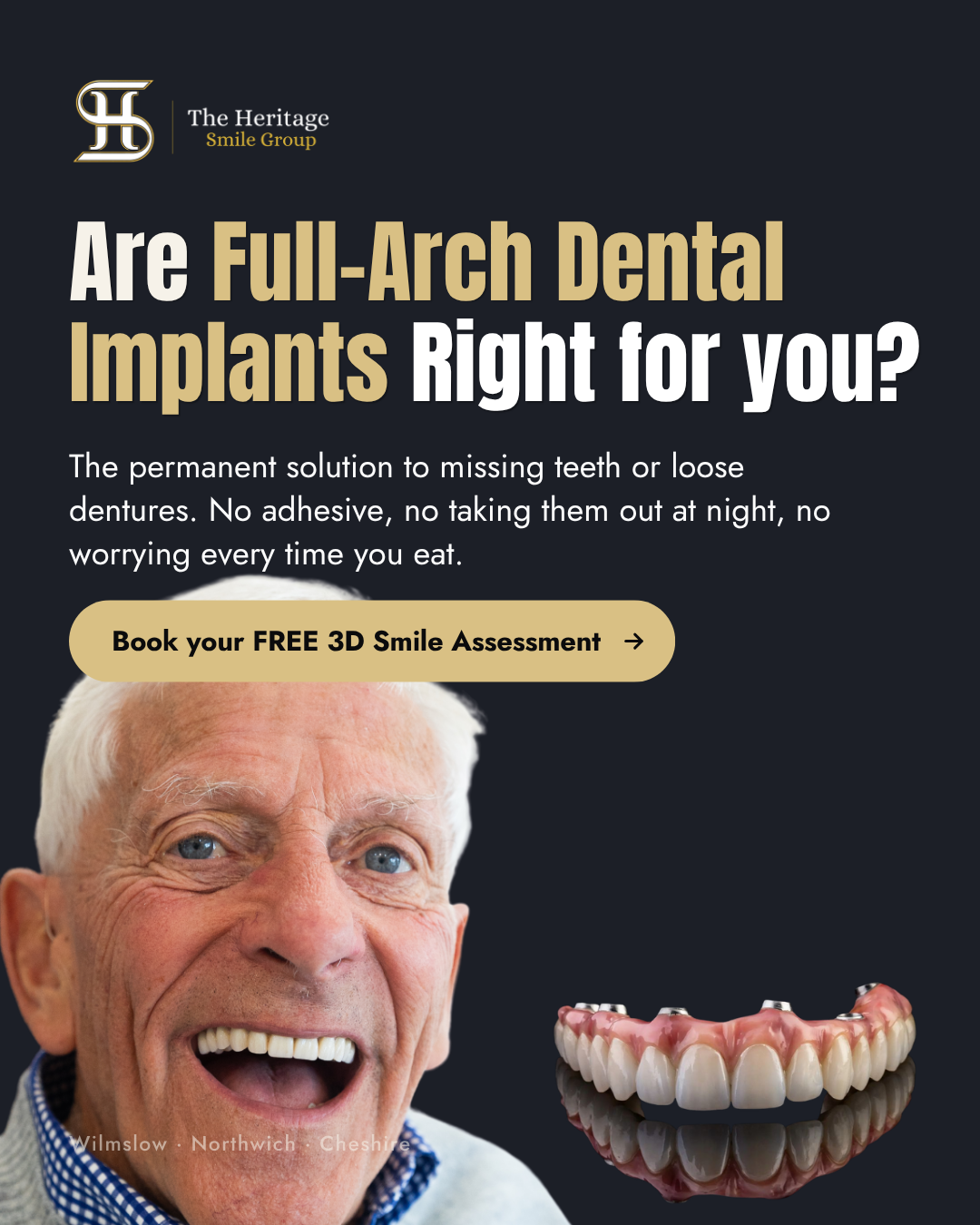
£15,000 to £30,000, and often a decade of avoidance behind it. Nobody decides that from an advert on a Wednesday.
The Bigger Brand is a Manchester-based dental marketing agency that runs full-arch and All-on-4 marketing for private dental practices and implant clinics across the UK and Ireland. The work covers paid advertising, treatment page content, video, seminar and open day campaigns, and long-term patient follow-up. Campaigns are built around long decision times and reported as consultations attended and arches placed, not enquiry volume.
Full arch is the biggest single case most practices will ever treat, and the patients who need it rarely come through general practice marketing. They don’t mention it at a check-up. Many of them haven’t sat in a dental chair for years.
So the marketing has to go out and find them, then stay with them for as long as the decision takes. That means advertising, a treatment page, video and follow-up built specifically around full arch, rather than an implant campaign with a bigger number on it.
They stopped eating in restaurants a while ago. They’ve got a way of holding a hand near their mouth when they talk, and they don’t notice it any more.
The denture doesn’t fit properly. It clicks, they’ve tried three adhesives, and they’ve stopped mentioning it to their partner because there’s nothing new to say.
Somewhere along the way they searched “teeth in a day” at half eleven at night, saw a number beginning with a two, and closed the laptop.
That’s who you’re marketing to: someone carrying a slow, quiet embarrassment, who has already decided the answer is unaffordable.
They already know the treatment exists. Your job is to make it feel possible, and that takes months rather than clicks.

Most practices treat finance as a footnote.
A patient looking at £18,000 is doing one calculation: can I afford this? If the answer they arrive at is no, everything else you’ve written is irrelevant.
A patient looking at £249 a month is doing a different calculation entirely, and it’s one where the answer is often yes. Same price, completely different decision.
So finance goes on the advert, on the landing page above the fold, and in the first message after an enquiry. It carries the representative example and the “subject to status” wording, which is a regulatory requirement, not a style choice.
Full-arch advertising carries the tightest restrictions in implant dentistry.
Phrases like “teeth in a day”, “permanent teeth” and “new teeth in 24 hours” all risk implying outcomes that can’t be guaranteed. Advertised prices must include the full cost of treatment, so a figure that leaves out the final prosthesis is a problem. Before-and-after images need documented consent and mustn’t imply typical results.
Finance promotions carry FCA requirements alongside ASA rules, including a representative example wherever a rate is quoted.
Every advert and page is checked before it goes live.
When a full arch campaign stalls, it’s usually down to one of these.
Full-arch enquiries are expensive and always will be, but one arch at £18,000 justifies a great deal of spend. Practices switch campaigns off at week six without ever working the maths through properly.
This is the biggest single failure. Almost nobody pays for full arch outright, so if a monthly figure isn’t visible, the patient rules themselves out before you ever speak.
Countdown timers and limited-time offers on a £20,000 irreversible decision read as desperate. They put off exactly the patient you want.
They enquired in February and weren’t ready. Nobody stayed in touch, and in September they booked somewhere else.
Nobody spends this much with a logo. They need to see the person who’d be doing the surgery, several times, before they’ll pick up the phone.
Full arch is surgically demanding and takes a lot of chair time. Filling a diary you can’t service creates a waiting list and a reputation problem.
Every part of the campaign is built for a decision that takes months, and sometimes years.
These are consistently the strongest format. There’s little commitment and no chair involved, and the patient sits in a room with others in the same position, which does more than any advert. Scanning and CBCT are available afterwards for anyone who wants them.
We film the surgeon explaining what happens on the day, what recovery looks like, what can go wrong and what happens if it does. Ten minutes of honesty outperforms any highlight reel.
The patient hears from somebody who was in exactly their position eighteen months ago. Nothing else moves them in the same way.
“From £14,995, or £249 a month over 60 months, subject to status.” The monthly figure is what changes the conversation from impossible to maybe.
They’ve priced it. So we cover aftercare, revisions, what happens at year three, and the real total cost once travel and follow-ups are included. There’s no point pretending it isn’t a factor.
Email and WhatsApp, kept low-key and useful: finance updates, patient stories, a note from the clinician. Arches placed in month eleven routinely come from enquiries made in month one.
We’ll review your full-arch marketing, finance messaging and follow-up, and show you where cases are slipping away. It’s free, and you’ll get an honest view.

Full-arch implant treatment, sometimes called All-on-4 or All-on-6, typically costs between £15,000 and £30,000 per jaw in the UK. The cost depends on the number of implants, the material of the final bridge, and whether preparatory treatment such as extractions or bone grafting is needed. Most practices offer finance over 12 to 60 months.
Full-arch enquiries commonly take six to twelve months to become placed cases, and some take much longer. Patients often research for a year or more before enquiring, frequently after wearing dentures for a long time. Campaigns judged on their first eight weeks usually understate the results, because most cases come from sustained follow-up.
Information seminars and low-commitment consultation events are generally the most effective format, because they lower the barrier for patients who have avoided dental treatment for years. Video led by the clinician, patient stories with documented consent, published price ranges with monthly finance figures, and long-term follow-up usually outperform short-term advertising.
Yes. Publishing a price range alongside monthly finance figures generally improves case quality, because patients qualify themselves before enquiring. Under ASA rules, advertised prices must include the full cost of treatment, including the final prosthesis. Where finance rates are quoted, FCA requirements apply, including a representative example and the right status wording.